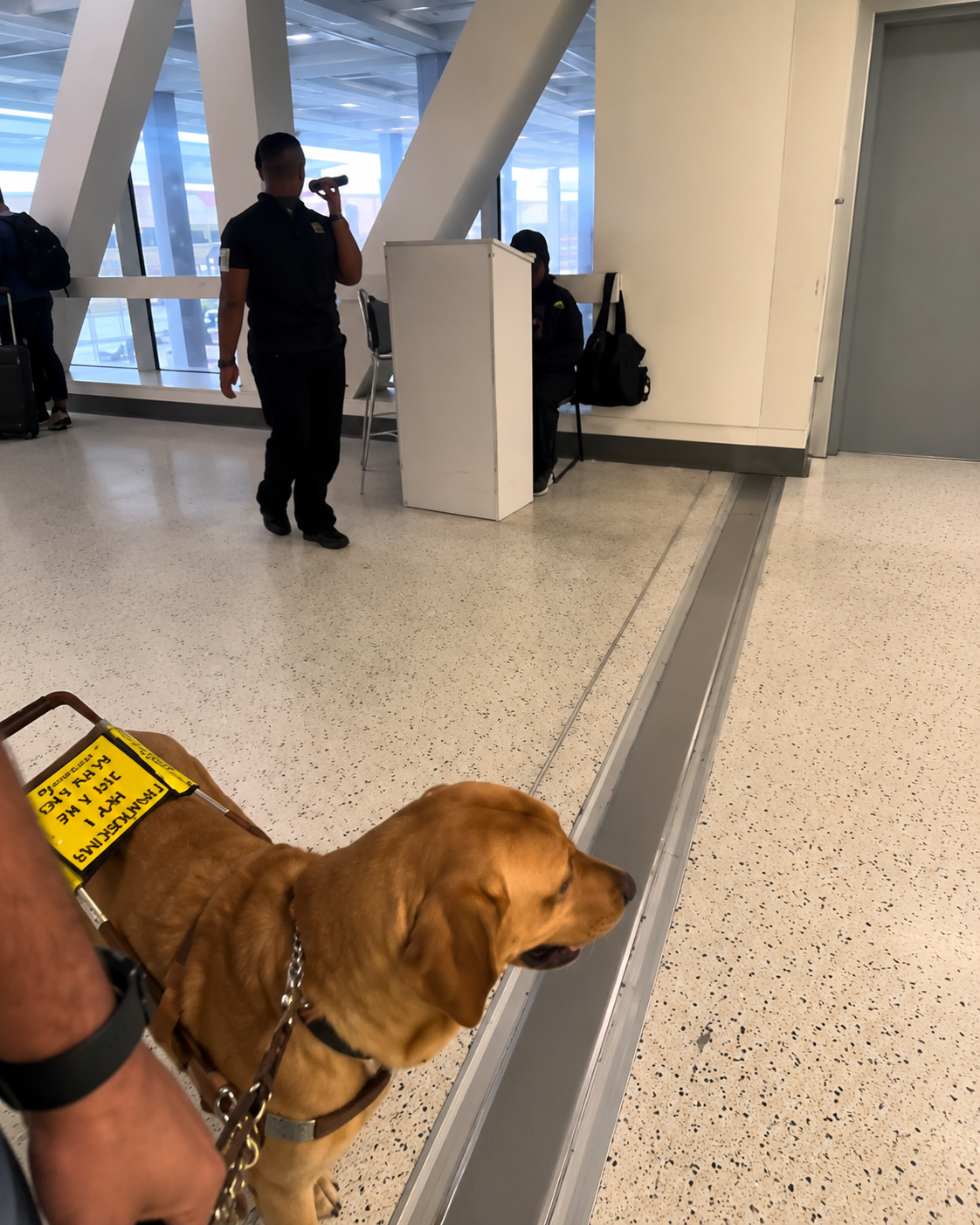
A blind passenger traveling with a guide dog was reportedly blocked from using an escalator at a Houston airport, in an incident that has now drawn wider attention online.

The incident was highlighted by View From The Wing and shared in a clip posted to X, where the exchange appeared to show the passenger being stopped while trying to continue through the airport. According to the report, the passenger was met with the dismissive response, “I do not care.”
The moment quickly became more than a simple airport argument. For many travelers, especially those with disabilities, the issue is about whether airport staff and contractors understand how to handle service animals and accessibility needs in a safe and respectful way.
A guide dog is not a pet. It is a trained service animal that helps a blind or visually impaired person move through public spaces, including airport terminals, security areas, gates, elevators, escalators, and connecting paths.
That makes communication especially important. If an airport worker believes there is a safety concern involving an escalator, the proper response should be clear guidance, an accessible alternative, and respectful assistance — not a confrontation that leaves the traveler feeling dismissed.
Airports are already stressful places for many passengers. Travelers are dealing with crowds, security screening, gate changes, boarding deadlines, moving walkways, elevators, escalators, and tight connection times. For blind passengers, those challenges can become even more difficult when staff do not respond with patience and care.
The incident also comes at a time when disability access in air travel remains under close public scrutiny. Airlines, airports, and contractors are expected to provide safe and dignified assistance to passengers who need help moving through the travel process.
For service-animal users, the issue is not simply whether a dog is allowed inside a building. It is whether the passenger can travel with independence, dignity, and safety.
It is not yet clear from the public clip whether the person blocking the passenger was an airline employee, airport worker, contractor, or another party. But the reaction online shows how quickly accessibility disputes can become reputational problems for everyone involved in the travel experience.
For aviation watchers, the takeaway is simple: passenger experience is not only about aircraft cabins, delays, upgrades, and loyalty programs. It is also about whether airports treat vulnerable travelers with basic care, patience, and respect.