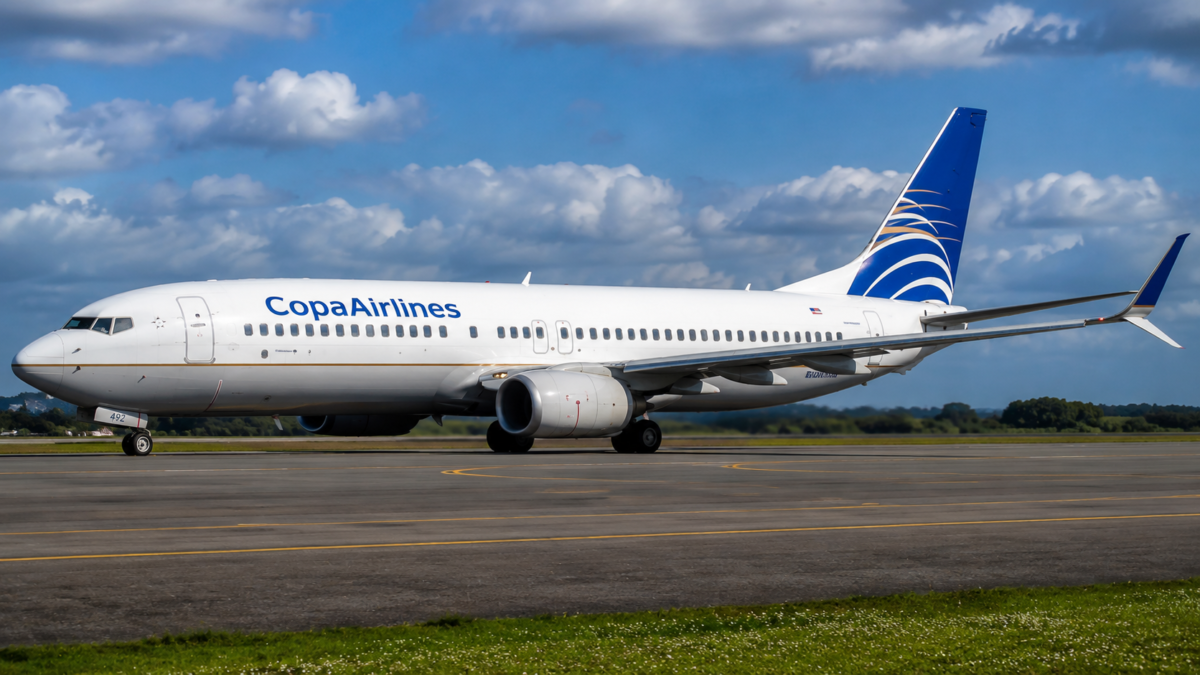
A Copa Airlines captain became involved in a tense radio exchange with air traffic control after landing at San José, Costa Rica, and exiting the runway at a different point than controllers said had been instructed.
The incident involved Copa flight 342 from Panama City to San José on July 4. According to View From The Wing, the Boeing 737 landed at Juan Santamaría International Airport and exited the runway via Juliet, while the tower supervisor later said the aircraft had been instructed to continue to the end and exit via Alpha.
The disagreement quickly became more than a routine taxiway misunderstanding. The crew’s exit reportedly complicated the aircraft’s movement to the gate and temporarily affected other aircraft movements on the airport surface.
The captain said he had not heard the Alpha instruction and had already begun turning before a later call came through. He also argued that the airport layout made the taxi route difficult and criticized the lack of a high-speed runway exit.
The conversation escalated when the captain referred to the situation as “incompetence,” prompting the tower supervisor to push back and ask for the captain’s name for a report.
The supervisor said the instruction to continue to Alpha had been part of operational planning, partly because the aircraft’s gate was occupied. The captain, however, continued to argue that the routing created the problem and said his name could be found in the flight plan.
The exchange became even more heated when the captain told the supervisor he was at the gate if the supervisor wanted to come over. The supervisor then asked whether that was a threat, while the captain replied that he was simply saying where he could be found.
For passengers, the incident may have looked like a delay or awkward taxi situation. But for airport operations, runway exits and taxi instructions matter because they help keep aircraft moving safely and predictably around active surfaces.
When an aircraft exits at a different point than expected, controllers may need to adjust ground movements, hold other aircraft, or change taxi plans. Even if there is no immediate safety emergency, the situation can create confusion and extra workload for both pilots and controllers.
Copa reportedly confirmed it is investigating the matter, while Costa Rican aviation safety and human factors personnel are expected to review the full frequency recording.
For aviation watchers, the incident is notable not only because of the runway exit itself, but because of how quickly the radio exchange turned personal. Professional communication between pilots and controllers is a key part of safe airport operations, especially when both sides disagree about what was heard or understood.
The case is a reminder that aviation safety is built not only on procedures, but also on calm communication. A wrong turn on the ground can be corrected, but a breakdown in cockpit-to-tower communication can make a simple surface issue much harder to manage.