The European Union Aviation Safety Agency has appointed a technical advisor to the investigation into a Ryanair-operated Boeing 737-800 flight in which a passenger was partially pulled through a dislodged window.
The July 10 incident involved a Malta Air aircraft flying from Thessaloniki, Greece, to Memmingen, Germany. The window failed shortly after takeoff while the aircraft was over North Macedonian airspace, prompting the crew to return to Thessaloniki.
EASA said it is aware of the event and is coordinating with the U.S. Federal Aviation Administration, which certified the aircraft design, and Boeing. The European regulator said it will monitor the investigation and take any continued-airworthiness action needed to protect safety.
North Macedonia leads the investigation
North Macedonia is leading the inquiry because the event occurred in its airspace. Boeing is assisting, while the FAA has said it is ready to support the investigation.
The aircraft was a Boeing 737-800, part of the 737 Next Generation family that preceded the 737 MAX. Reuters reported that the flight was operated by Malta Air, a Ryanair subsidiary.
Investigators have not established why the window dislodged. That distinction matters because early reports and images can show visible damage without proving the sequence of failures that caused it. Any conclusion about the aircraft, engine or maintenance history must wait for evidence from the formal inquiry.
Passenger suffered non-life-threatening injuries
A Serbian passenger was partially pulled through the opening before other passengers helped bring him back inside, according to accounts cited by Reuters. Serbia’s consulate said he was taken to AHEPA University General Hospital in Thessaloniki and did not face life-threatening injuries while doctors assessed his condition.
Ryanair said the aircraft landed normally and passengers returned to the terminal. The airline’s initial statement confirmed that a passenger window had dislodged in flight but did not explain the cause.
What regulators will examine
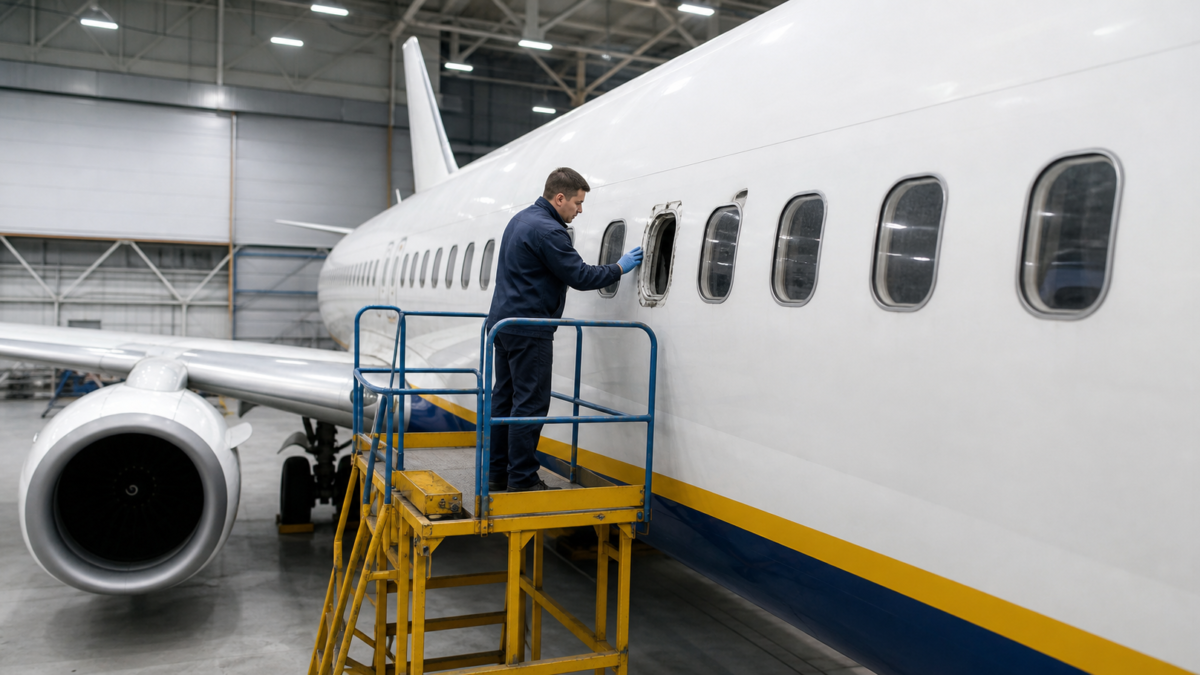
The investigation is expected to examine the failed window, surrounding fuselage structure and any external damage, along with maintenance records, flight data and physical evidence recovered from the aircraft. It will also determine whether the event has implications for other 737 NG aircraft.
EASA’s involvement does not itself mean a fleet-wide safety measure will follow. The agency can issue continued-airworthiness action if investigators identify a condition that requires inspections, repairs or operating restrictions.
Until the cause is established, the confirmed development is that EASA has added technical expertise to the North Macedonia-led inquiry. Airlines and 737 NG operators will be watching closely for any recommendations from EASA, the FAA or Boeing.