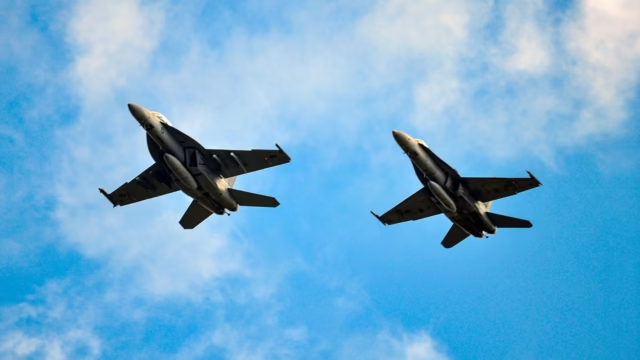
The U.S. Air Force sent a massive portion of its B-1B Lancer fleet to one British airbase, turning RAF Fairford into one of the most important bomber hubs outside the United States.
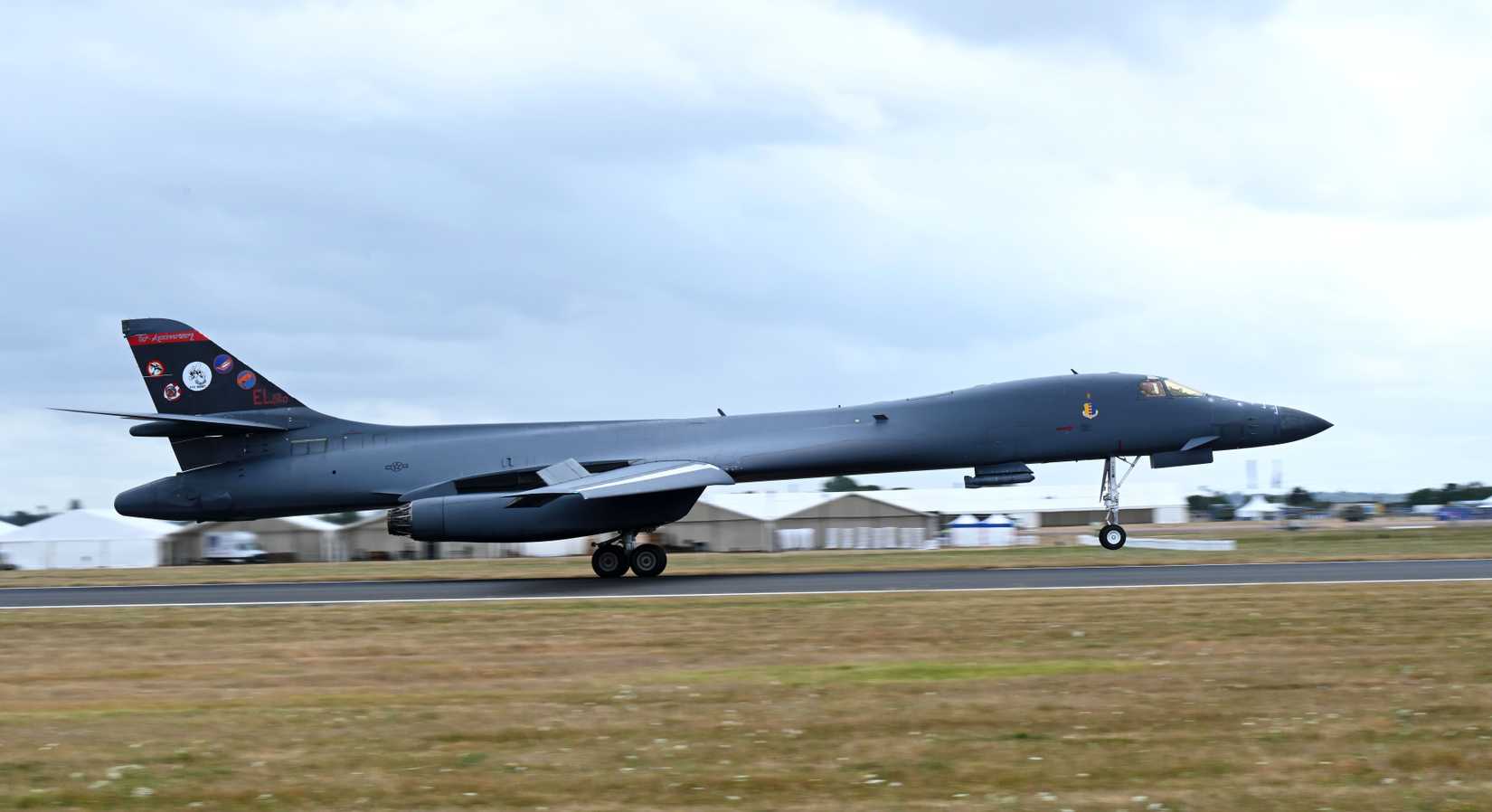
The deployment was highlighted by Simple Flying, which examined why the U.S. Air Force would concentrate roughly a third of its B-1B fleet at a single base in Britain.
The answer comes down to geography, runway capability, bomber infrastructure, and operational pressure. RAF Fairford is not just another airbase. It is one of the most important U.S.-linked heavy bomber operating locations in Europe, with the runway length, ramp space, support facilities, and history needed to handle aircraft like the B-1B, B-52, and B-2.
Open-source defense reporting said around 15 B-1B Lancers and six B-52H Stratofortresses were operating from RAF Fairford during the buildup. That made the B-1B presence especially notable because the active Lancer fleet is now much smaller than it once was.
The B-1B is no longer a Cold War nuclear bomber. Today, it is a conventional long-range strike aircraft, valued for speed, payload, endurance, and the ability to carry large numbers of guided weapons.
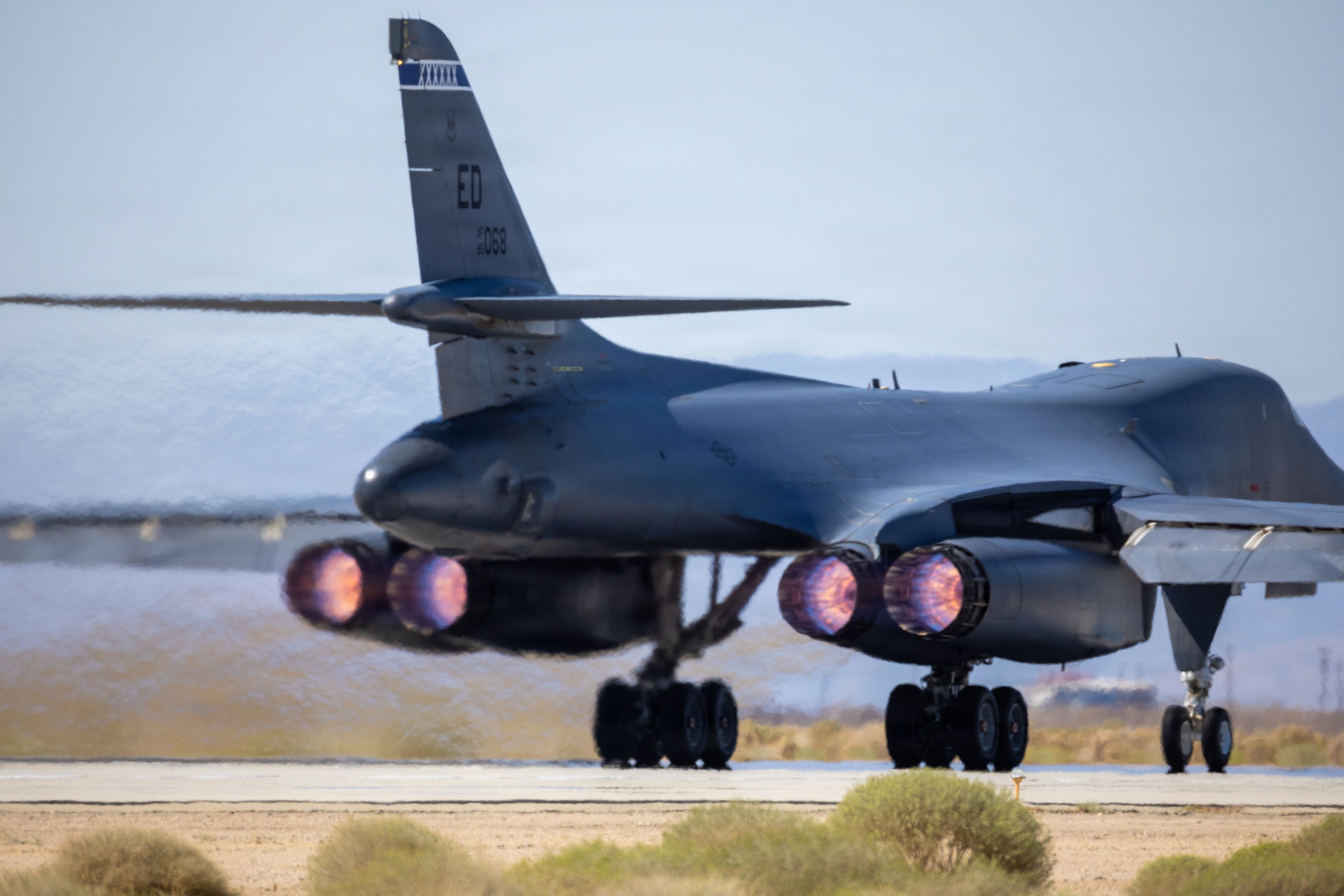
For the U.S. military, basing B-1Bs in Britain can reduce the distance to key operating areas compared with launching every mission from the continental United States. Shorter mission distances can reduce tanker demand, lower crew fatigue, and make it easier to generate repeated bomber sorties.
That matters during sustained operations. A bomber can fly from the United States to a distant theater, but doing that repeatedly is expensive, tiring, and tanker-heavy. A forward base like Fairford gives commanders more flexibility.
RAF Fairford also sends a clear strategic message. When a large number of American bombers arrive in Europe, allies notice, adversaries notice, and aviation watchers notice. The aircraft are visible, loud, and difficult to ignore.
The B-1B’s role is especially important because it can carry a very large conventional payload. That makes it useful for missions requiring heavy guided weapons, repeated strikes, or long-range conventional power projection.
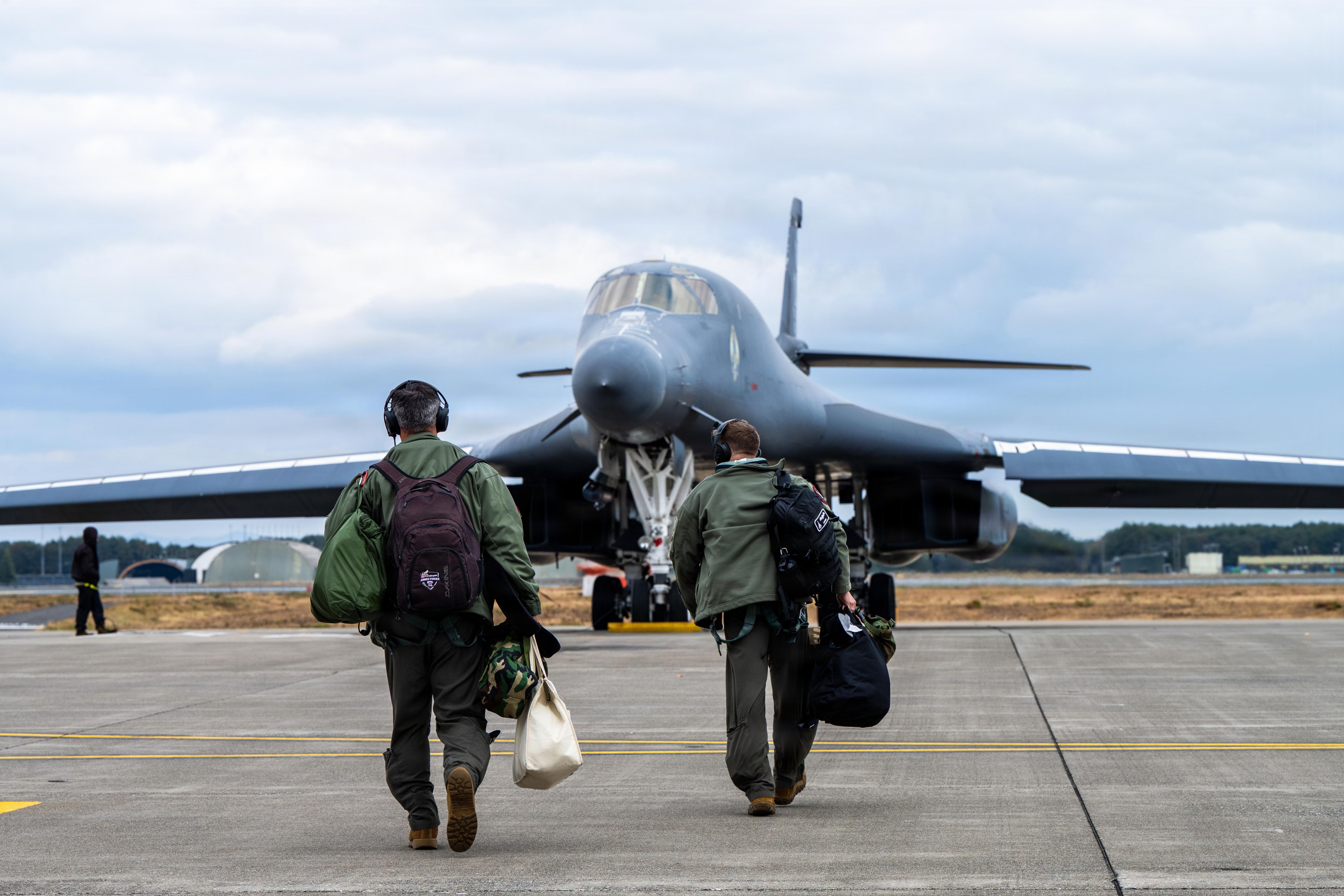
The deployment also shows why bomber operations are not only about aircraft numbers. A base must be able to handle maintenance, weapons loading, crew support, tanker coordination, security, and high-tempo flight operations.
That is why RAF Fairford matters. The base has long been associated with U.S. bomber rotations, Bomber Task Force missions, and large American aircraft operating in Europe.
The scale of the bomber presence also affected civilian aviation events. Reporting from AeroTime said RAF Fairford’s operational use contributed to the cancellation of RIAT 2026, one of the world’s biggest military airshows, because the airfield’s runway, ramp space, and support areas were tied up by U.S. bomber operations.
The B-21 Raider video above also points to the future of the bomber force. The Air Force plans to eventually replace the B-1B and B-2 with the B-21, but until that transition is complete, the Lancer remains a major part of America’s conventional long-range strike capacity.
That makes the Fairford deployment more than just a temporary movement of aircraft. It shows the Air Force still depends heavily on the B-1B when it needs large bomber numbers quickly.
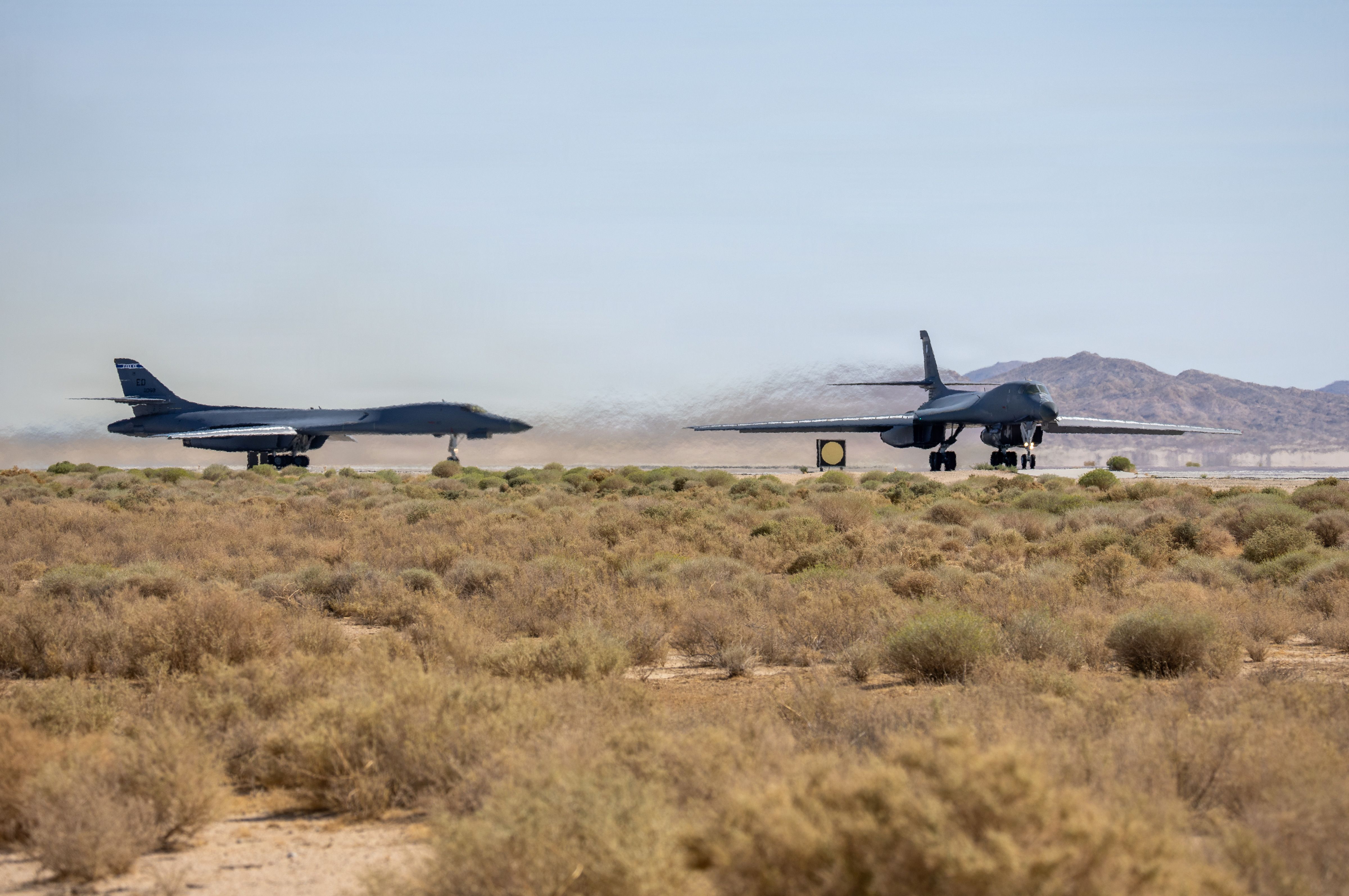
There are also maintenance and readiness questions. The B-1B fleet is old, demanding, and smaller than it used to be. Sending 15 aircraft overseas is a major commitment, especially when not every bomber is available for operations at any given time.
That is why the phrase “a third of the fleet” matters. It does not mean the Air Force simply moved a few bombers for a routine visit. It means a large share of a limited, high-demand fleet was concentrated at one forward location.
For NATO allies, the deployment demonstrates American reach and commitment. For opponents, it shows the U.S. can still move large conventional bomber power into Europe quickly. For the Air Force, it proves the B-1B remains useful even as the service prepares for the B-21 era.
The bigger takeaway is simple: RAF Fairford gives the U.S. a heavy bomber foothold in Europe, and the B-1B gives commanders a fast, payload-heavy aircraft that can still shape events far from home.
That is why the deployment caught so much attention. It was not only about aircraft parked on a British ramp. It was about what those aircraft represent: long-range strike power, operational pressure, and the continued importance of the B-1B before the next generation fully arrives.
Comments 0
No comments yet. Be the first to share your take.