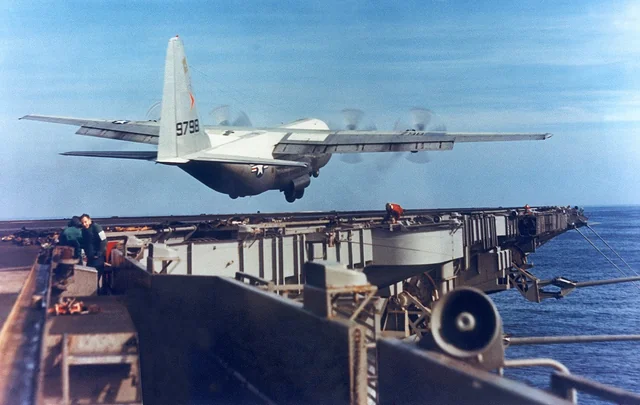
One of the most unbelievable records in naval aviation still belongs to the Lockheed C-130 Hercules, a massive military transport aircraft that successfully landed on an aircraft carrier in 1963.
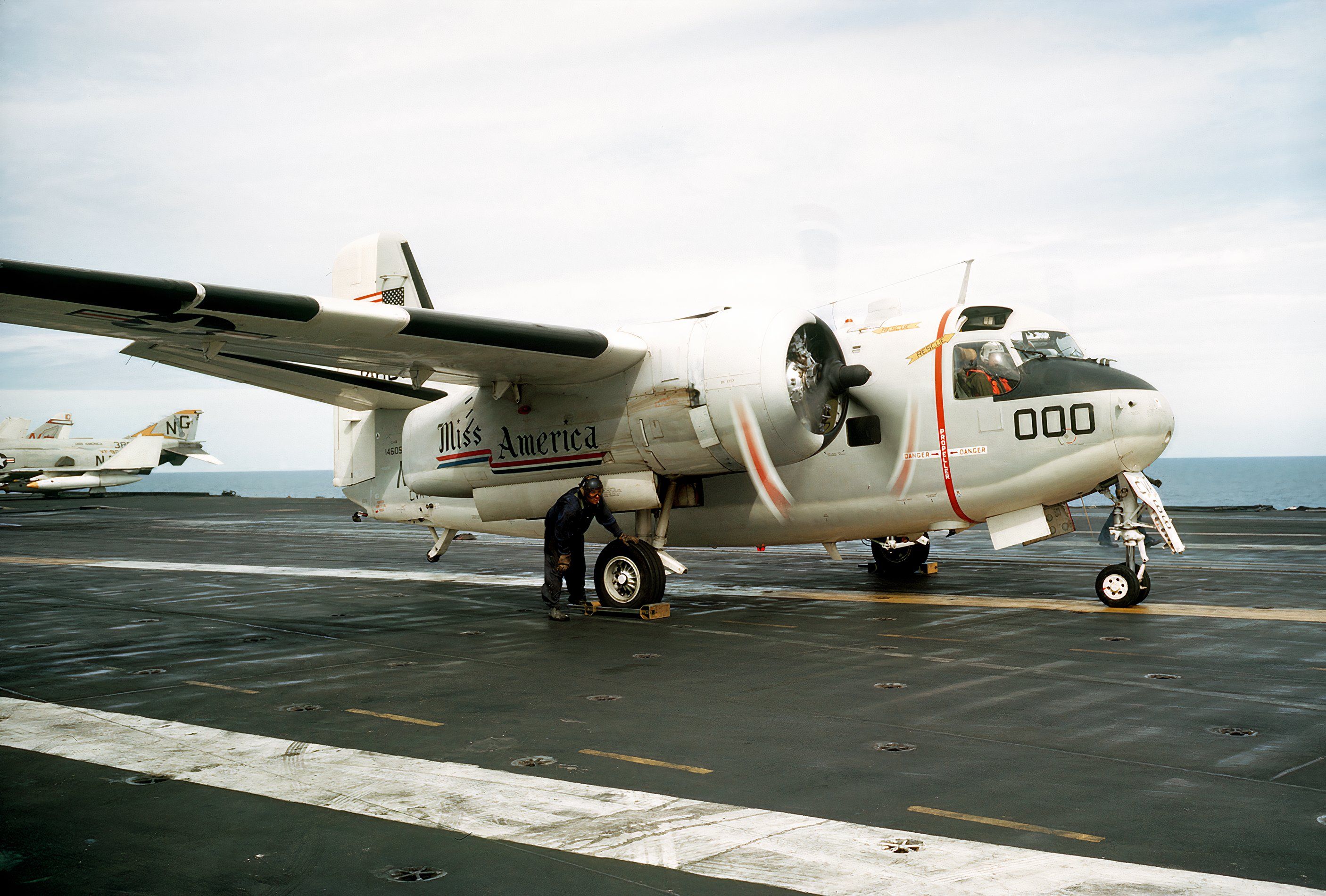
The record was highlighted by Simple Flying, which revisited how the U.S. Navy tested whether a large transport aircraft could operate from an aircraft carrier as a possible carrier onboard delivery aircraft.
The aircraft used for the test was a KC-130F Hercules, a Marine Corps version of the famous C-130 transport. Unlike normal carrier aircraft, the Hercules was not built to use a catapult for takeoff or an arresting hook for landing.
That is what made the test so extraordinary. The aircraft had to land and stop using only its own brakes, reverse thrust, strong headwinds, and the movement of the aircraft carrier into the wind.
The test took place aboard USS Forrestal, one of the largest U.S. Navy aircraft carriers of its time. In October and November 1963, the KC-130F carried out a series of approaches, touch-and-go landings, full-stop landings, and takeoffs from the carrier deck.
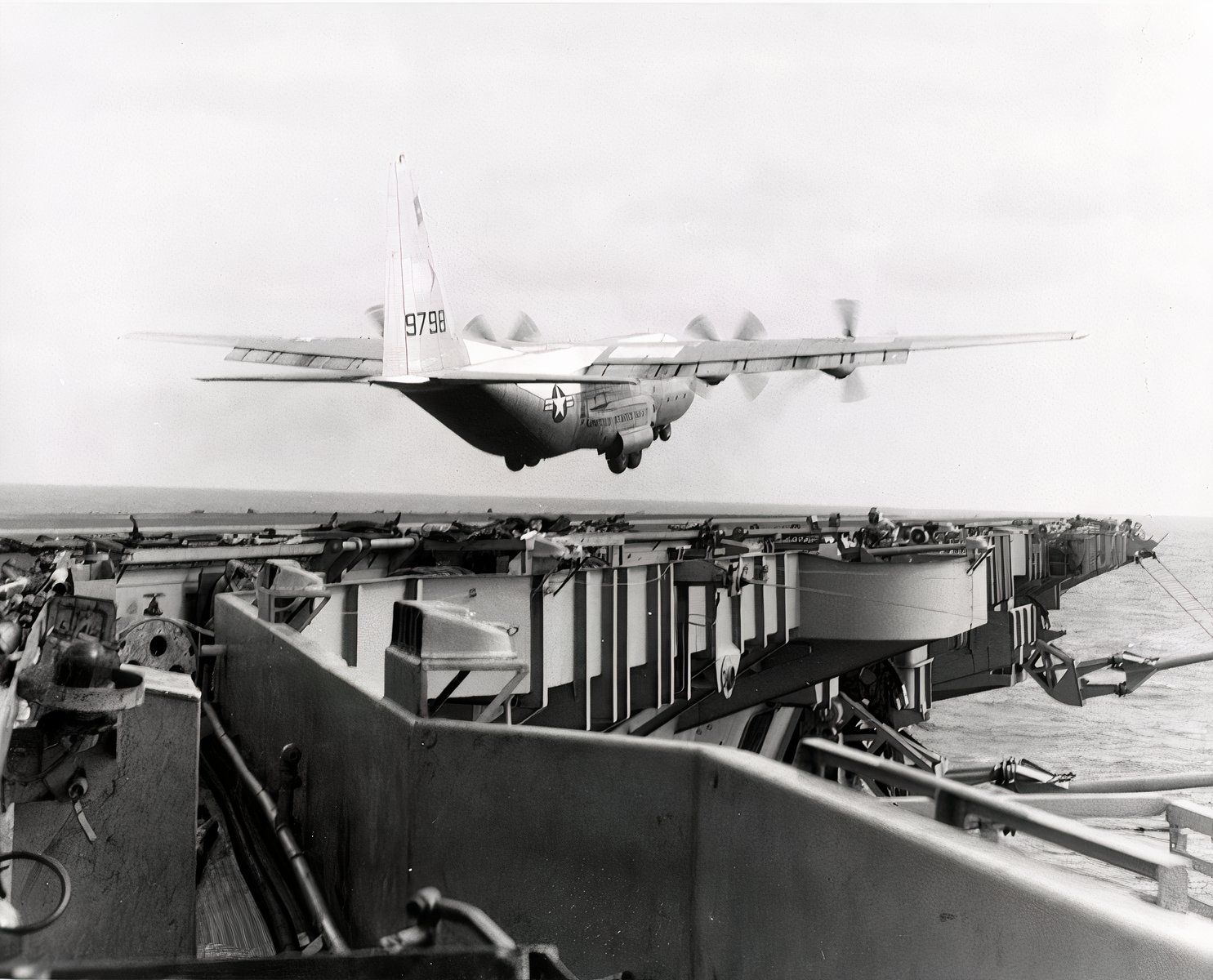
The flights were led by Lieutenant James H. Flatley III, who helped prove that the Hercules could operate from a carrier under controlled test conditions. The aircraft became the largest and heaviest airplane ever to land on a U.S. Navy aircraft carrier, a record that still stands today.
Guinness World Records notes that the KC-130F performed 21 unarrested landings and unassisted takeoffs aboard USS Forrestal in moderately rough seas about 800 kilometers from the U.S. coast.
That achievement showed the remarkable short-field ability of the C-130. The Hercules was already known for operating from rough, short, and remote airstrips, but landing on a carrier deck was a completely different level of precision.
The C-130’s size made the test even more dramatic. This was not a small naval aircraft built for carrier operations. It was a four-engine turboprop transport designed to move cargo, troops, equipment, and supplies over long distances.
The MOAB is so heavy, watch the C-130 as the bomb exits the plane! pic.twitter.com/kphplQtEPr
— Lockheed C-130 Hercules (@C130TheHerc) July 9, 2026
The reason for the experiment was practical. The Navy wanted to know whether a larger aircraft could carry more cargo to carriers at sea than existing carrier delivery aircraft. In theory, a C-130 could move far heavier loads and support ships operating far from shore.
But the test also exposed the limits of the idea. Even though the aircraft proved it could land and take off from a carrier, routine operations were considered too risky and impractical. The Hercules was simply too large to fit naturally into normal carrier deck operations.
Instead of turning the C-130 into a regular carrier onboard delivery aircraft, the Navy continued using smaller aircraft designed specifically for carrier operations. The role later became closely associated with aircraft such as the C-2A Greyhound.
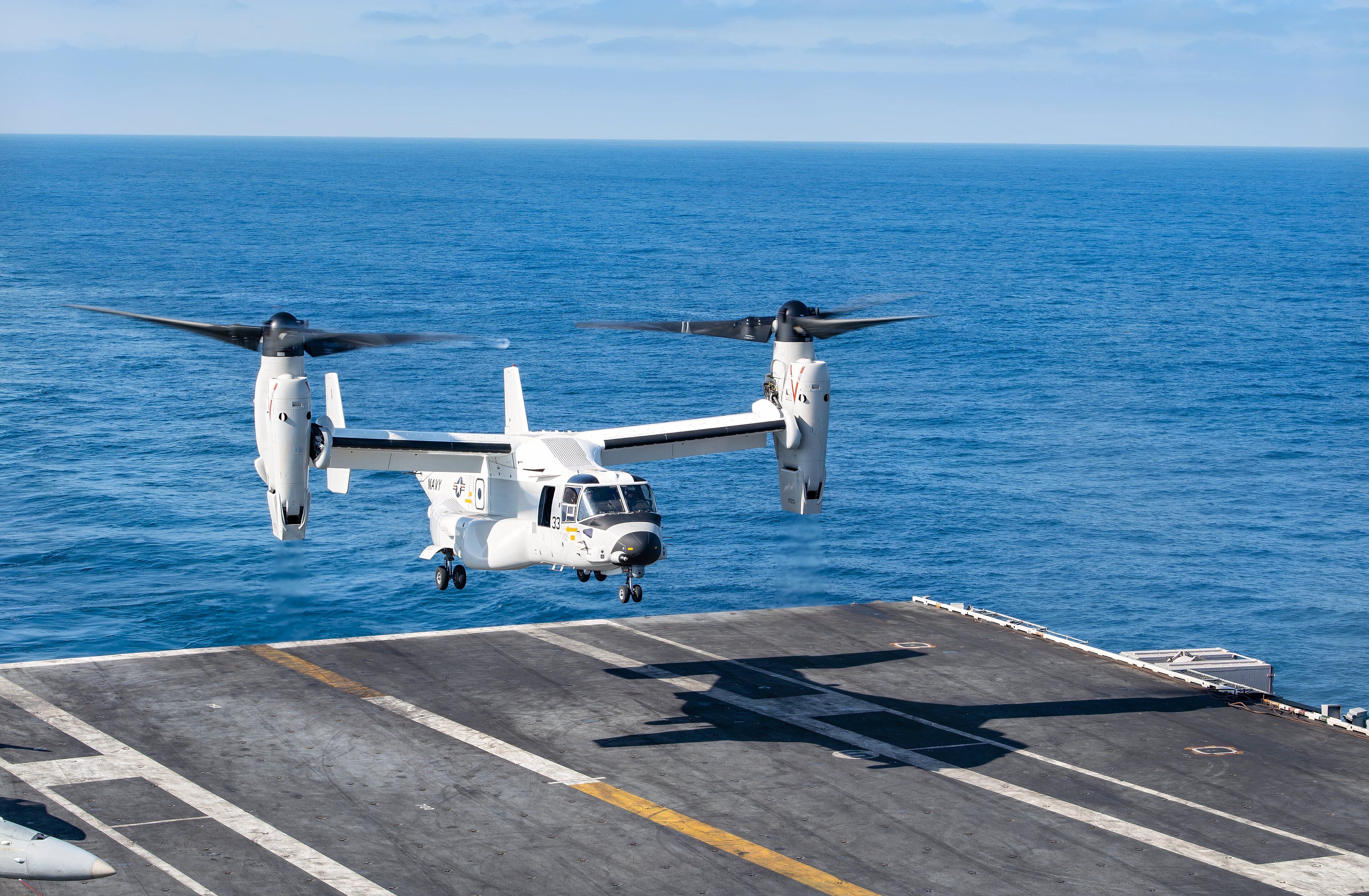
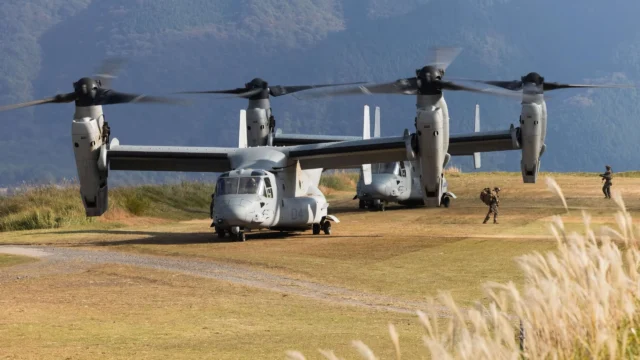
Today, the carrier logistics mission has changed again. The Navy has moved from the C-2A Greyhound toward the CMV-22B Osprey, a tiltrotor aircraft that can land vertically and reach ships that cannot support traditional fixed-wing carrier aircraft.
That makes the C-130 carrier landing record even more unusual. It sits between two worlds: the classic fixed-wing carrier era and the modern push for more flexible ship-to-shore logistics.
The C-130 test did not lead to routine Hercules carrier operations, but it proved something remarkable about both the aircraft and the pilots involved. Under the right conditions, a large transport aircraft could do something almost nobody expected from a cargo plane.
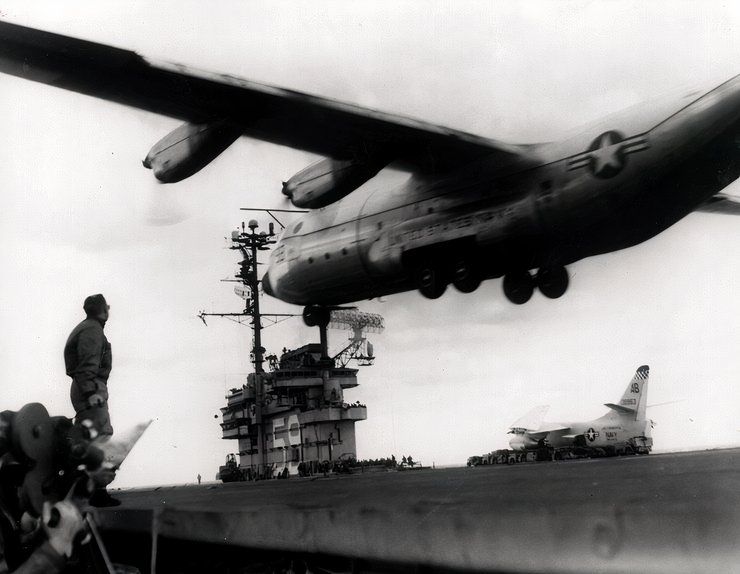
For aviation watchers, the story remains fascinating because it sounds almost impossible today. A huge four-engine Hercules landed on an aircraft carrier without a tailhook, took off without a catapult, and left behind a record that has never been beaten.
More than six decades later, the C-130’s carrier landing is still remembered as one of the boldest proof-of-concept tests in military aviation history.
Comments 0
No comments yet. Be the first to share your take.