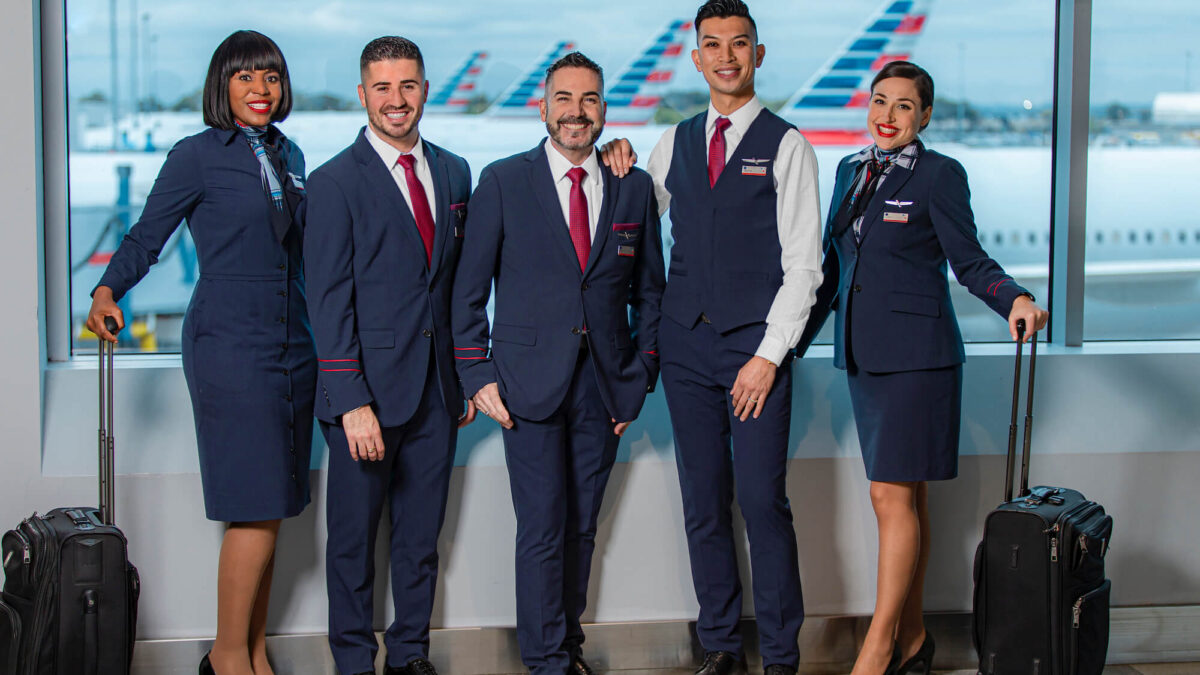
American Airlines reportedly wants friendlier flight attendants, but the reason is not only about creating a better flight experience. It is also about credit card sign-ups.
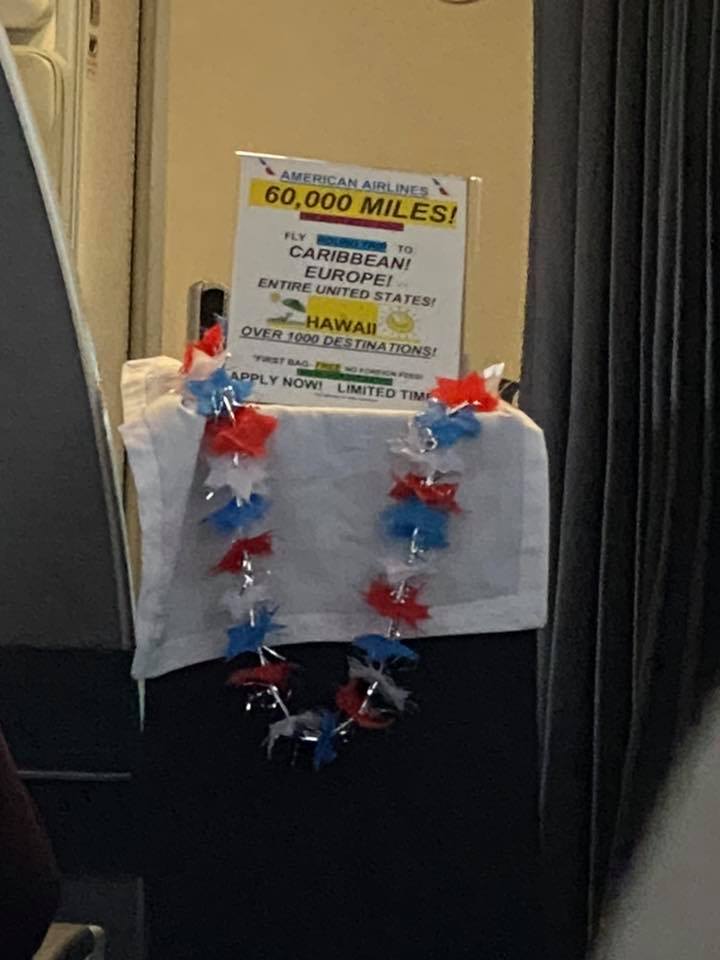
The issue was highlighted by View From The Wing, which reported that American Airlines is making a major push to get flight attendants more engaged with in-flight credit card pitches. According to the report, the airline is emphasizing that exceptional service during the flight can help increase card applications.
That creates an unusual connection between cabin service and airline revenue. A friendly greeting, better attitude, and warmer onboard experience may not just affect customer satisfaction. It may also make passengers more likely to listen when a flight attendant later promotes an AAdvantage credit card.
American’s logic appears simple: passengers who feel well treated may be more open to applying, while passengers who feel ignored, annoyed, or frustrated are less likely to respond positively to a credit card pitch.
View From The Wing reported that credit card approvals can act as “accelerators” in American’s new flight attendant scoring system, even though in-flight credit card pitching is described as voluntary and can earn flight attendants extra income when applications are approved.
AA
Major push underway to get FAs excited about in-flight credit card pitches. FAs being told just how much money they can make from them if they succeed (pay off loans, travel the world, etc)Expect flights to become slightly more annoying in this regard.
Now, it should…— JonNYC (@xJonNYC) August 3, 2026
Advertisement
The credit card push comes as American’s co-branded card business becomes even more important. American and Citi announced a long-term expanded partnership, with Citi becoming the exclusive issuer of the AAdvantage co-branded card portfolio in the U.S. in 2026.
That deal matters because Citi is taking over American’s credit card acquisition channels, including in-flight and airport sign-ups. In other words, the airplane cabin is not only a transportation space. It is also a sales channel.
For passengers, this could mean more frequent or more energetic card announcements during flights. The concern is that American may improve customer service partly so passengers become more receptive to a sales pitch later in the flight.
There is a delicate balance. Passengers generally want polite, helpful, and professional flight attendants. But many travelers also dislike loud credit card announcements, especially on early morning flights, late-night flights, or flights where people are trying to sleep.
That is where the strategy can become risky. If flight attendants feel pressured to pitch more aggressively, passengers may see the effort as annoying rather than friendly. A better service culture could help American, but only if the credit card pitch does not overwhelm the actual onboard experience.
American has a strong financial reason to care. Reuters reported that American received $6.2 billion in 2025 cash payments from co-brand and other partners, showing how important loyalty and credit card partnerships have become to the airline business.
Credit card revenue is attractive because it is not tied only to how many tickets an airline sells. Banks buy miles and pay airlines through loyalty partnerships, giving carriers a powerful revenue stream outside the basic fare.
For American, that means the AAdvantage credit card is not just a side product. It is part of the airline’s broader profit strategy, especially as loyalty programs become more closely tied to spending, partner activity, and credit card use.
The passenger reaction may be mixed. Some travelers like airline credit cards because they can earn miles, free checked bags, boarding benefits, or lounge access depending on the product. Others see the in-flight pitch as another example of airlines turning every part of travel into an upsell.
The biggest challenge for American is making the pitch feel natural. A short, respectful announcement may be accepted. A long, repeated, high-pressure sales push could make passengers feel trapped inside a flying advertisement.
For flight attendants, the issue is also complicated. Some may welcome the chance to earn extra income through approved applications. Others may feel that selling credit cards distracts from their core role: safety, service, and managing the cabin.
That tension is why this story is bigger than one credit card announcement. It shows how airlines are trying to connect customer experience, employee behavior, and financial products inside the same flight.
For passengers, the takeaway is simple: American may want friendlier flights, but the airline also wants those friendlier flights to produce more AAdvantage credit card applications. Whether that improves the experience or makes flights feel more sales-driven will depend on how the message is delivered onboard.
Comments 1
What??