Denmark is moving deeper into NATO’s maritime surveillance build-up with a new Boeing P-8A Poseidon order, while several allies are also lining up behind Northrop Grumman’s MQ-4C Triton unmanned aircraft. Together, the moves point to a sharper allied focus on submarine tracking, long-range ocean patrols and early warning across the Arctic and High North.
The announcements came around the NATO Summit Defense Industry Forum in Ankara, Turkey, where alliance members highlighted fresh investments in surveillance and defense-industrial capacity. According to Simple Flying, Denmark plans to buy two P-8A Poseidon maritime patrol aircraft, while Denmark, Finland, Germany and Norway are moving to procure up to five MQ-4C Triton drones for a joint intelligence, surveillance and reconnaissance effort.
For Denmark, the P-8A fills a clear gap. The Poseidon is based on the Boeing 737 platform but built for maritime patrol, anti-submarine warfare, anti-surface warfare and intelligence missions. NAVAIR describes the aircraft as a long-range maritime patrol and reconnaissance platform able to work with both traditional crewed forces and evolving unmanned sensors.
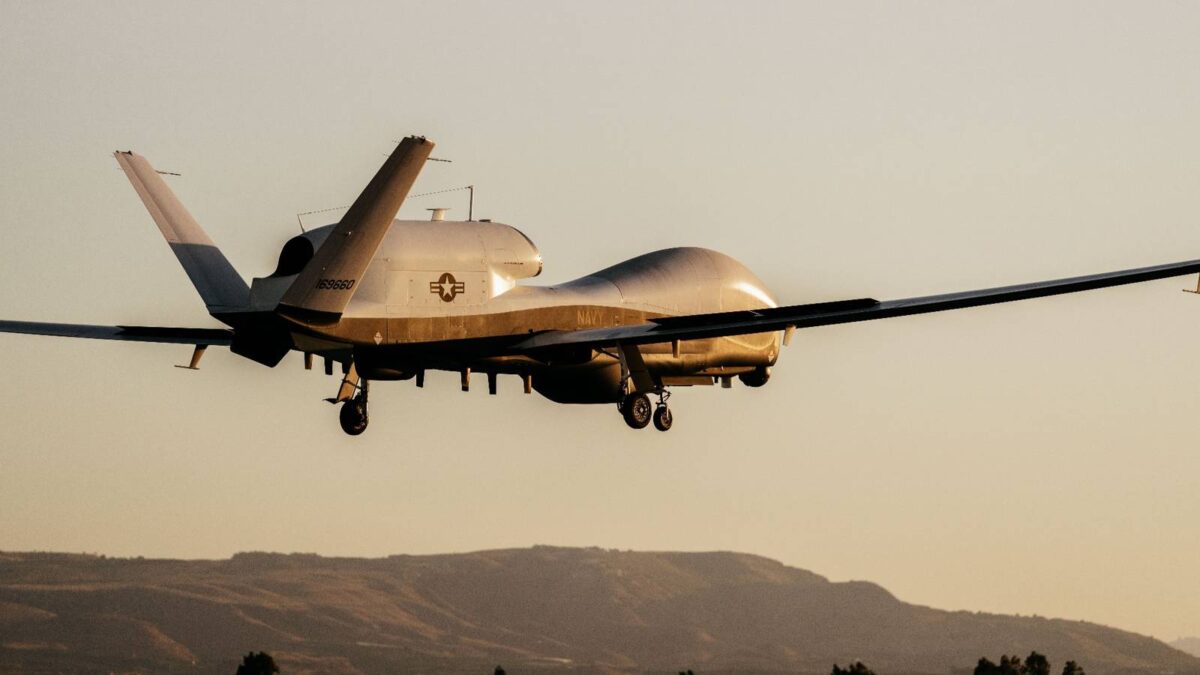
That last point is where the Triton matters. The MQ-4C is designed for high-altitude, long-endurance maritime surveillance, giving commanders a wider and more persistent view of ocean areas than crewed patrol aircraft can provide alone. Northrop Grumman says Triton can operate above 50,000 feet for more than 24 hours and cover huge maritime areas with its sensor suite.
Simple Flying reports that the Tritons tied to the NATO effort will be based at Sigonella in Italy, a familiar hub for U.S. Navy maritime patrol operations. From there, the aircraft can help watch the Mediterranean, North Atlantic approaches and other NATO areas where persistent surveillance is increasingly valuable.
The broader logic is hard to miss. Russia’s undersea activity, the vulnerability of seabed cables and pipelines, and the growing strategic importance of the Arctic have pushed NATO countries to rebuild maritime patrol capacity after years of relying heavily on older fleets and U.S. support. A Danish P-8 force would plug into an existing allied Poseidon community that already includes countries such as Norway, the United Kingdom and Germany.
The P-8 and Triton are not competing solutions. They are complementary pieces of the same surveillance picture: the drone can stay high and watch for long periods, while the Poseidon can investigate, classify and respond with crew, sensors and weapons on board. For Denmark and NATO, that combination makes the order more than a simple aircraft purchase. It is a bet on a more connected way to patrol Europe’s northern seas.