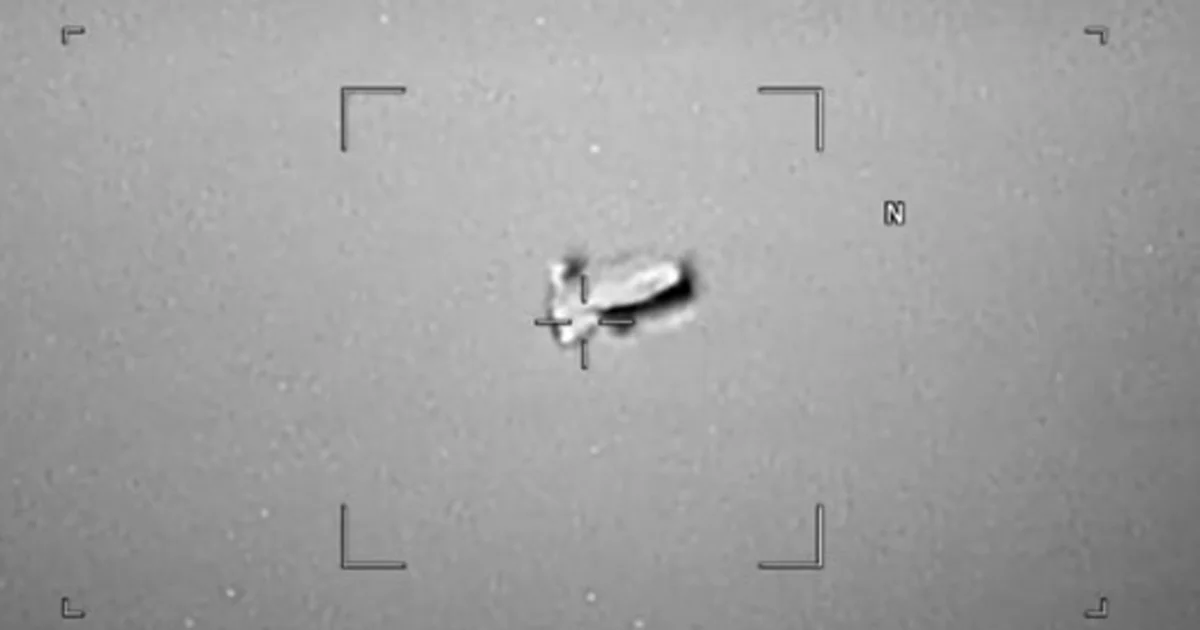
The Pentagon has released another batch of declassified UFO and UAP material, including videos and records that are now drawing heavy attention online.
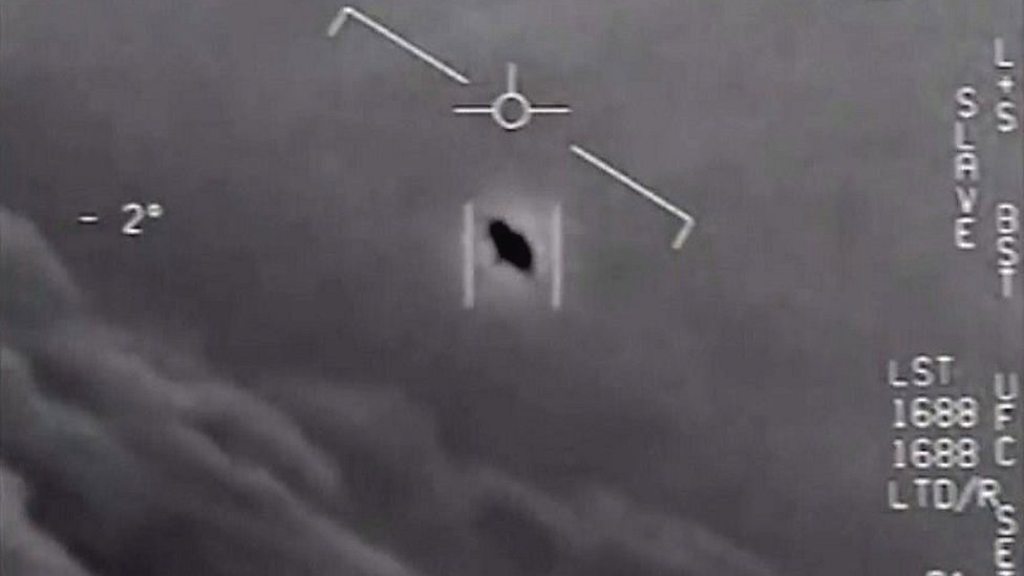
The latest release was highlighted by View From The Wing as part of a roundup of aviation and travel-related stories. The most widely shared clip appears to show what online posts describe as a large, two-tiered structure captured by an infrared sensor aboard a U.S. military platform.
The footage quickly gained attention because it is being described as one of the clearest UAP videos released so far. The object remains unidentified in the publicly discussed material, which has made the clip especially popular across social media.
The release is part of a wider government effort to publish more records related to unidentified anomalous phenomena, commonly known as UAPs or UFOs. According to People, the latest Pentagon release added 40 files, including documents, videos, audio recordings, and images tied to unresolved aerial encounters.
The records reportedly span from 1948 to 2025 and include material connected to multiple government agencies. That matters because many modern UAP discussions are no longer based only on eyewitness stories. They now involve official documents, military sensors, infrared video, and airspace reporting.
Another post circulating online said the latest release was the fourth batch of Pentagon UFO-related files, adding more documents and videos for public review.
Advertisement
Still, the release does not prove that the objects are alien spacecraft. In aviation and defense reporting, “unidentified” simply means the object or event has not been fully explained using the information available to the public.
Some UAP cases may involve drones, balloons, conventional aircraft, atmospheric effects, sensor limitations, classified technology, or incomplete data. That is why newly released clips usually require careful review before any stronger claim can be made.
The aviation angle remains important. Unknown objects in controlled airspace, restricted airspace, military training areas, or near sensitive facilities can create safety and security concerns even before investigators know exactly what they are seeing.
For military aviation, unidentified sensor contacts can also raise operational questions. If pilots or defense systems cannot immediately classify an object, officials may need to review whether it was a threat, a misread sensor return, a civilian object, or something that still cannot be explained.
The new release also shows why UAP reporting has become more mainstream. The subject is no longer only about speculation. It is now tied to airspace safety, military sensor data, national-security review, and government transparency.
For aviation watchers, the key takeaway is not that the Pentagon has confirmed alien life. It has not. The bigger story is that more official UAP records are being pushed into public view, giving researchers, journalists, and the public more material to examine.
A clearer video does not automatically solve the mystery. But it does add another unusual case to a growing public archive of unexplained aerial and sensor events.