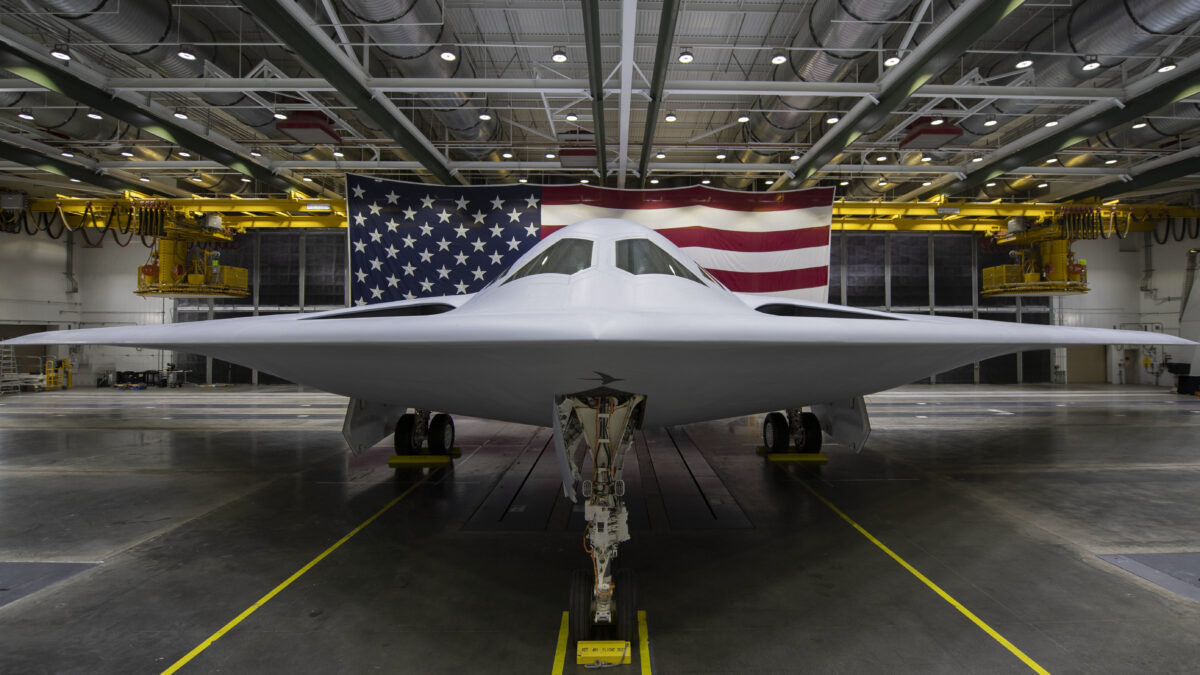
The B-21 Raider has reached an unusual milestone in military aviation: it is being marketed and discussed as a sixth-generation aircraft before any sixth-generation fighter has entered operational service. That may sound odd at first, because generation labels are usually tied to fighter jets. But the Raider is not being judged by fighter lineage. It is being judged by the future combat system it is designed to sit inside.
Northrop Grumman calls the B-21 the world’s first sixth-generation aircraft, pointing to its combination of next-generation stealth, advanced networking, open systems architecture and long-range survivability. The U.S. Air Force describes the bomber as a dual-capable penetrating strike aircraft that will carry conventional and nuclear weapons and form the backbone of the future bomber force alongside the B-52.
The key difference is that the B-21 is not simply a new stealth bomber shaped like a smaller B-2. It is being built as part of a wider family of systems, with roles that can connect long-range strike, intelligence, surveillance, reconnaissance, electronic attack and communications. In other words, the aircraft is intended to operate as one node in a larger combat network rather than as a standalone bomber.
That is why the sixth-generation label arrived here before it arrived on a fighter in service. Sixth-generation fighter programs are still moving through development, selection and testing, while the B-21 has already flown and is progressing through its test campaign. The Raider’s first public reveal came in December 2022, and its first flight followed in November 2023.
The Air Force also emphasizes the Raider’s open systems architecture, a design approach meant to make future upgrades easier as threats change. That matters because the aircraft is expected to remain relevant for decades, operating in high-threat environments where air defenses, sensors and electronic warfare systems will continue to evolve.
For the United States, the bomber is also tied directly to nuclear deterrence. The Air Force says the B-21 will be nuclear capable and able to employ a broad mix of stand-off and direct-attack munitions. At least 100 aircraft are planned, with Ellsworth Air Force Base selected as the first main operating base.
The result is a rare case where a bomber, not a fighter, gets to the next-generation label first. Whether the term sixth-generation becomes a universal classification for bombers is still open to debate, but the B-21’s design priorities show why the claim exists: stealth alone is no longer the headline. Survivability, software, networking and upgradeability are now just as central to the aircraft’s identity.
Comments 0
No comments yet. Be the first to share your take.