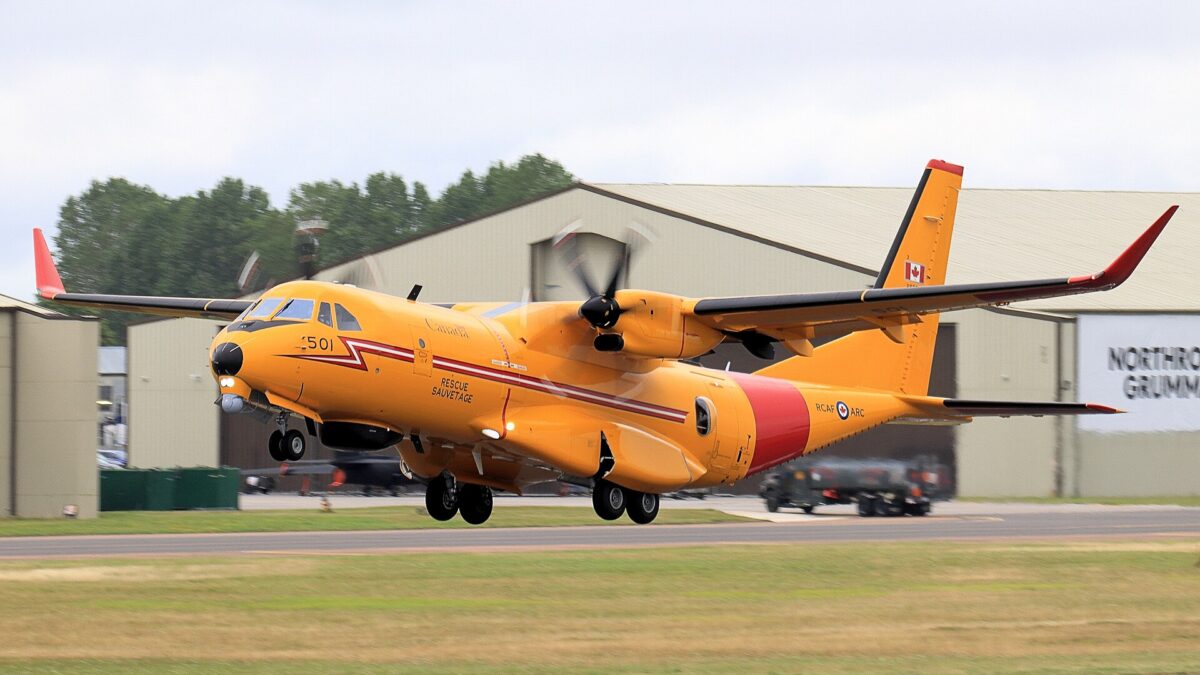
Canada’s long-delayed CC-295 Kingfisher program is taking another visible step toward nationwide coverage. The Royal Canadian Air Force has moved a Kingfisher to 17 Wing Winnipeg, where personnel are preparing the third of four planned operating locations for the country’s new fixed-wing search-and-rescue fleet.
The arrival does not mean the Winnipeg detachment is already conducting operational rescue missions. Canada’s latest departmental plan targets the start of CC-295 operations there for January 2027, after crews, maintainers and the base complete the required training and readiness work.
A third base for the Kingfisher
Winnipeg follows 19 Wing Comox, British Columbia, where the CC-295 formally entered operational service on May 1, 2025, and 14 Wing Greenwood, Nova Scotia, which received two aircraft as the East Coast location began standing up. The final planned operating base is 8 Wing Trenton, Ontario.
At Winnipeg, 435 Transport and Rescue Squadron is transitioning from the CC-130H Hercules search-and-rescue role. The change is significant because the squadron covers a vast central and northern region where range, weather and sparse infrastructure can turn a routine search into a complex mission.
The RCAF will continue relying on Hercules aircraft and other existing assets while the Kingfisher network is built out. That phased approach is intended to preserve rescue coverage during training, certification and infrastructure work.
A program that took longer than planned
Canada selected the Airbus C295-based solution in 2016 and ordered 16 aircraft to replace the CC-115 Buffalo and the CC-130H Hercules in the dedicated fixed-wing search-and-rescue mission. The first Canadian aircraft arrived at Comox in 2020, but technical, certification and training issues pushed operational service well beyond the original schedule.
The CC-115 Buffalo was retired in 2022, while Hercules aircraft remained in service to bridge the gap. The Kingfisher was finally released to service in March 2025 and began operations at Comox in May. According to the Department of National Defence, the fleet’s first operational rescue followed on May 21, 2025.
Canada now says the project remains within its approved scope and budget. During the 2026-27 fiscal year, the government plans to stand up Winnipeg operations and accept the sixteenth and final aircraft. Full operational capability across the four-base network is scheduled for 2029-30.
Why the CC-295 matters for search and rescue
The Kingfisher is smaller than the Hercules it replaces in the dedicated rescue role, but it was acquired as a purpose-built sensor platform. Canada says its onboard systems can help crews locate people or objects from more than 40 kilometres away in low-light conditions and share mission data in real time with other search assets.
The aircraft carries an electro-optical and infrared camera, maritime-search radar and an integrated tactical mission system. Its bright yellow livery is not merely distinctive branding; visibility is useful when the aircraft is operating around rescue scenes in difficult terrain or poor weather.
Canadian modifications include additional fuel capacity, cockpit changes and mission-specific equipment. A standard crew consists of two pilots, a search-and-rescue air combat systems officer, a flight engineer and two search-and-rescue technicians.
What happens next
The immediate milestone is not simply moving more airframes. Winnipeg must prove it can generate trained crews, maintain the aircraft and conduct missions safely as part of Canada’s national rescue system. The final aircraft delivery and the later transition at Trenton will determine how quickly the RCAF can retire its interim arrangements.
For communities across the Prairies, the North and Canada’s interior, the Winnipeg stand-up is the clearest sign yet that the Kingfisher is shifting from a troubled procurement story into an operational rescue network. The next test is whether the program can keep its January 2027 Winnipeg target and reach full capability by the end of the decade.